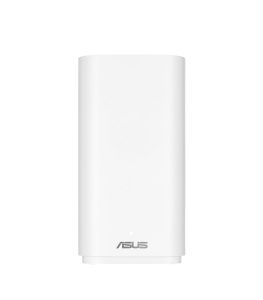
 The Asus ZenWiFi BD4 Outdoor (W-1-PK) BE3600 is designed as a next-generation outdoor networking solution built specifically for ultra-fast, stable, and long-range wireless coverage using WiFi 7 (802.11be) technology. Unlike traditional indoor routers, this model is engineered to withstand outdoor environments while still delivering enterprise-level performance for homes, offices, farms, campuses, and large commercial areas. It combines AiMesh extendable networking with dual-band connectivity, allowing users to build a seamless whole-home or whole-campus mesh system. With support for IPv4 and IPv6, it ensures full compatibility with modern internet infrastructure and future-proof networking standards. The BE3600 class performance (688 Mbps on 2.4GHz and 2882 Mbps on 5GHz) provides a strong balance between speed and range, making it suitable for both high-speed streaming and long-distance connectivity needs. Its rugged design, compact build, and advanced networking intelligence make it a powerful outdoor solution in the evolving WiFi 7 ecosystem.
WiFi 7 (802.11be) Technology and Network Standards Explained
At the core of the Asus ZenWiFi BD4 Outdoor is WiFi 7 (802.11be), which is the latest evolution in wireless networking. WiFi 7 significantly improves speed, latency, and efficiency compared to WiFi 6 and WiFi 5. It supports multiple legacy standards including WiFi 6 (802.11ax), WiFi 5 (802.11ac), WiFi 4 (802.11n), IEEE 802.11g, 802.11b, and 802.11a, ensuring backward compatibility with older devices. The biggest advantage of WiFi 7 is its ability to use wider channels (up to 320 MHz in full specification, though device-dependent) and advanced modulation like 4096-QAM, which increases data density and throughput. This means more data can be transmitted in less time, improving performance for high-bandwidth applications like 4K/8K streaming, cloud gaming, and video conferencing. The inclusion of IPv6 ensures modern addressing support, which is essential for future internet scalability and improved routing efficiency.
Performance, Speed Capabilities, and Dual-Band Efficiency
The ZenWiFi BD4 Outdoor delivers BE3600-class performance with a combined theoretical speed of up to 3560 Mbps, distributed as 2882 Mbps on the 5GHz band and 688 Mbps on the 2.4GHz band. The 5GHz band is optimized for high-speed, low-interference connections, making it ideal for streaming, gaming, and heavy downloads. Meanwhile, the 2.4GHz band provides wider coverage and better penetration through walls and outdoor obstacles such as trees or building structures. The dual-band architecture ensures balanced load distribution between devices, reducing congestion in high-density environments. This performance is further enhanced by OFDMA (Orthogonal Frequency Division Multiple Access), which allows multiple devices to share a single channel efficiently, reducing latency and improving network responsiveness in crowded usage scenarios.
Hardware Architecture: Processor, Memory, and System Efficiency
The Asus ZenWiFi BD4 Outdoor is powered by a 1.5GHz quad-core processor, which plays a crucial role in managing network traffic, security processes, AiMesh coordination, and QoS optimization. This processor ensures smooth handling of multiple connected devices without performance degradation. It is supported by 512MB RAM and 128MB flash memory, which provide sufficient capacity for firmware operations, system stability, and configuration storage. The hardware architecture is optimized for continuous outdoor operation, meaning it can maintain performance even under heavy load conditions. This is especially important in environments where multiple users or smart devices are connected simultaneously, such as smart homes, outdoor surveillance systems, or public WiFi zones.
Antenna Design, Coverage, and Signal Transmission Technology
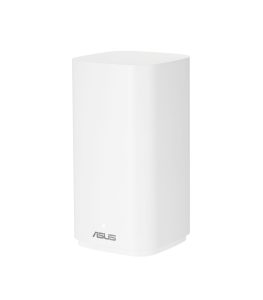 This outdoor router is equipped with internal antennas x2, designed for compact durability and optimized signal distribution. Despite having fewer visible antennas compared to traditional routers, Asus uses advanced beamforming and signal processing technologies to ensure strong directional coverage. The system supports both standard-based beamforming and universal beamforming, which helps direct WiFi signals toward connected devices rather than broadcasting them uniformly in all directions. This improves signal strength, reduces interference, and extends coverage range. The 2×2 MIMO configuration for both 5GHz and 2.4GHz bands ensures stable simultaneous data transmission and reception. This makes the device highly effective in outdoor environments such as gardens, open fields, rooftops, and multi-building setups where consistent signal strength is critical.
Advanced Speed Boosting Technologies and Optimization Features
To maximize wireless performance, the ZenWiFi BD4 Outdoor integrates several advanced technologies such as OFDMA, MU-MIMO, and 4096-QAM modulation. OFDMA improves efficiency by allowing multiple devices to transmit data simultaneously over shared channels. MU-MIMO (Multi-User Multiple Input Multiple Output) ensures that multiple devices can receive data at the same time without waiting in a queue, significantly reducing latency. The inclusion of 4096-QAM increases data throughput by packing more bits into each transmission. Additionally, support for 20/40/80/160 MHz channel bandwidths allows the router to dynamically adjust based on network congestion and environmental conditions. These technologies work together to ensure consistent performance even in high-density outdoor environments.
Operating Modes, Flexibility, and AiMesh Ecosystem Integration
One of the strongest features of this router is its flexibility in operating modes. It supports Wireless Router Mode, Access Point Mode, Repeater Mode, and AiMesh Node Mode. This allows users to customize their network setup based on specific requirements. In AiMesh mode, the device can be integrated into a larger Asus mesh network, working seamlessly with other compatible Asus routers to provide unified WiFi coverage across large areas. AiMesh enables seamless roaming, meaning devices automatically switch to the strongest signal node without disconnecting. This is particularly useful for outdoor campuses, hotels, or large residential properties. The system can function as either a primary AiMesh router or a secondary node, making it highly adaptable for different network architectures.
Connectivity Ports, Physical Design, and Outdoor Durability
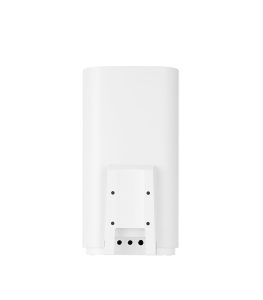
The Asus ZenWiFi BD4 Outdoor is equipped with 2.5G WAN/LAN auto-detecting Ethernet ports x2, allowing high-speed wired connectivity for backhaul or direct device connections. These high-speed ports ensure that the router does not become a bottleneck for gigabit-level internet connections. The device features a compact yet durable design with dimensions of 106 x 106 x 200 mm and a weight of 1040 grams, making it suitable for wall or pole mounting using the included mounting kit. It is engineered specifically for outdoor environments, with a robust enclosure designed to resist environmental exposure. The package includes RJ45 cable, power cord, warranty card, quick start guide, and mounting accessories, ensuring easy installation in various deployment scenarios.
Security, Parental Controls, VPN, and Network Protection Features
Security is a major focus of the ZenWiFi BD4 Outdoor, featuring AiProtection Pro powered by Trend Micro. This includes router security assessment, malicious site blocking, two-way intrusion prevention system (IPS), and infected device detection. It also supports WPA/WPA2/WPA3 encryption standards for secure wireless communication. Advanced VPN support includes OpenVPN, WireGuard, L2TP, PPTP, and IPSec for both client and server configurations, along with VPN Fusion for routing specific traffic through VPN tunnels. Parental controls allow web and app filtering, time scheduling, safe browsing, and reward-based access control. Additional features like DNS-over-TLS, firewall protection, and security scanning ensure a highly secure networking environment for both personal and professional use.
Traffic Management, Smart Controls, and Smart Home Integration
 The router includes advanced traffic management tools such as Adaptive QoS, traditional QoS, bandwidth monitoring, bandwidth limiting, and traffic analysis. These features help prioritize important applications such as video calls or gaming over less critical traffic. WAN and LAN management features include port forwarding, DMZ, DHCP server, IGMP snooping, IPTV support, and Wake-on-LAN functionality. Wireless features like airtime fairness, SSID customization, MAC filtering, and wireless scheduling provide additional control over network behavior. The router also supports smart home integration through Google Assistant, allowing users to control network settings using voice commands. Administration tools include system logs, diagnostics, firmware updates, and real-time connection notifications, making it highly manageable and user-friendly for both beginners and advanced users.
